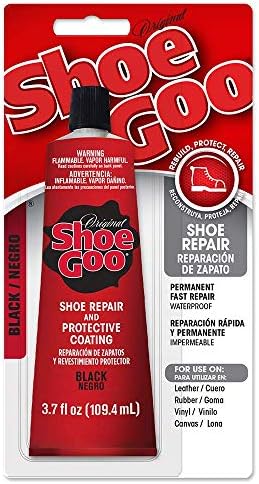
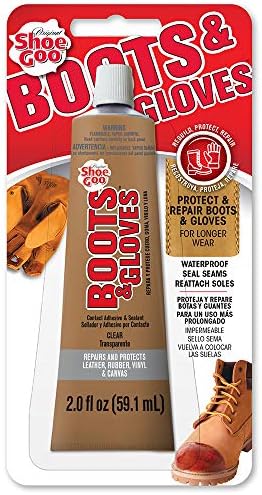
The original shoe repair adhesive — since 1972
One tube rebuilds worn soles, seals splits and coats the spots that wear out first — on leather, rubber, vinyl and canvas.
Shop the rangeThe tubes that leave our shelves fastest, year after year.
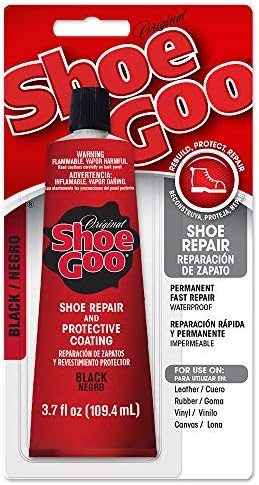
Part number 110212 — the standard black tube that workbenches and skate bags have carried for decades.
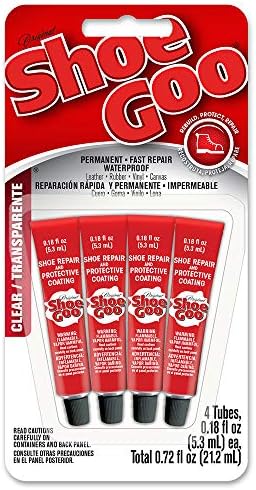
Four sealed minis in one card — small fixes covered for every season of the year.
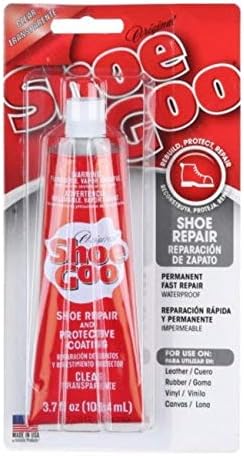
The all-purpose clear tube under part number 110011 — seals seams, glues soles and dries to a flexible, transparent finish.
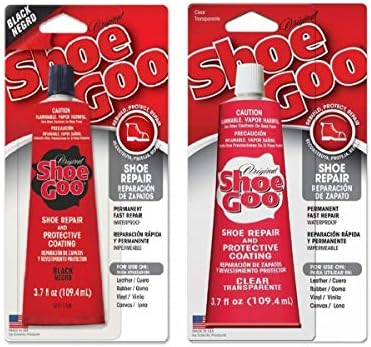
One clear, one black — the two-tube set that matches whatever shoe fails next.
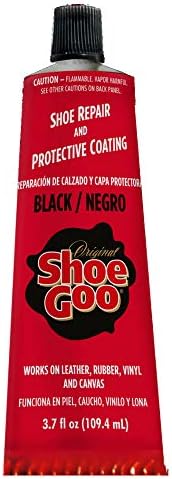
The black tube for black soles — repairs that disappear into dark rubber instead of standing out on it.
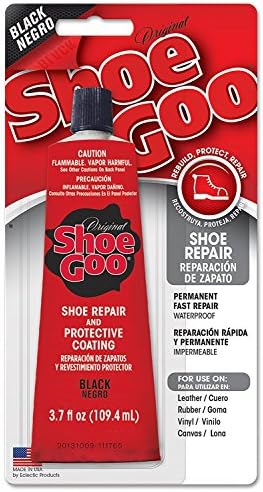
Two black tubes, plain and simple — the current fix and the one after it.
Shoe Goo created the shoe repair category in 1972 and the formula still sets the standard: a thick urethane rubber that cures flexible, waterproof and abrasion-resistant.
Build a worn heel back up in layers, coat a toe before it scuffs through, or glue a flapping sole in one pass — three jobs, one tube.
Leather, rubber, vinyl and canvas — plus waders, rain boots and work gloves with the Boots'n'Gloves formula. If it flexes, Shoe Goo holds it.
The best shoes you own are the ones already shaped to your feet. For over fifty years we’ve made the tube that keeps them going — on skateboards, work sites, trails and sidewalks — for a fraction of what replacing them costs.
In 1972 a chemist in Eugene, Oregon noticed that runners were throwing away shoes with hundreds of miles left in them — the uppers were fine, only the soles had worn through. The answer became Shoe Goo: a thick, self-leveling adhesive that could be spread onto a worn sole, cure into tough synthetic rubber, and put the pair back on the road. Skateboarders adopted it for ollie holes, tradespeople for work boots, and half a century later the red-and-white tube is still the first thing reached for when a good pair starts to go.
This is the full range: the original clear formula, the black version for dark soles, boxed mini tubes for single repairs, Boots'n'Gloves for rubber and waterproof gear, Penguin white for sneakers, and the multi-packs that keep households and repair benches stocked.
| Range | Best For | Sizes |
|---|---|---|
| Clear Adhesive | Invisible repairs on any color shoe | 3.7 oz tubes |
| Black Adhesive | Dark soles, work boots, skate shoes | 3.7 oz tubes, single and carded |
| Minis & Specialty | One-repair tubes, waders, sneaker whitening | 0.18 oz mini packs, 2 oz Boots'n'Gloves, Penguin |
| Multi-Packs & Bundles | Households, teams and repair benches | 2- to 20-packs of 3.7 oz, 1 oz boxes, applicator bundles |
A tube of Shoe Goo costs less than a tenth of a decent pair of shoes and typically delivers several repairs. The cured rubber outwears the original sole material in the spots it covers, which is why the same tube shows up in skate parks, on fishing boats and in janitors’ closets. Repairing the pair you already broke in is cheaper, faster and kinder to the landfill than starting over.
Clean and dry the surface, rough it up with sandpaper, apply, and give it 24 hours before light use — 48 to 72 for a full cure. Work in a ventilated space and let temperature do the rest: no clamps, no heat gun, no special skills. Every product page on this site carries the details for its size and formula.
We do not print testimonials with names attached. Below are the public rating totals these products carry, and our own reading of what such a number can and cannot measure.
4.6 average from 5,897 ratings
The black tube under part number 110212 carries the largest rating sample anywhere in the range — thousands of scores averaging in the mid-fours. A number that big says the formula survives contact with ordinary users on ordinary shoes; what it cannot tell you is whether black is the right call for your pair, since the cured bead stays visibly dark wherever it lands.
4.6 average from 2,331 ratings
The clear workhorse under part number 110011 holds the same mid-four average across a couple of thousand ratings. Our reading: at this sample size the score is really a verdict on the chemistry rather than on any one repair, because the tube gets used three different ways — as glue, as sealant and as a coating — and the average covers all of them.
4.6 average from 599 ratings
The sneaker whitener sits near the top of its category on several hundred ratings. A whitener is easier to judge instantly than an adhesive — you see the result the same day — so this score is about the finish itself, not patience with cure times.